Why Winnipeg's Soil is the Way It Is

Winnipeg’s soil contains a lot of clay. For Winnipeg landscaping companies, that can be a challenge because clay expands when it absorbs water, and expands even more when that water freezes, and then shrinks when it dries out. This is particularly true for the type of clay Winnipeg has. So the ground in Winnipeg moves a lot throughout the year.
This is something we always have to account for when building patios, walkways, or driveways. It can easily destroy what we make! If you need further convincing, just look at our city's streets.
The reason Winnipeg has so much clay goes back to the end of the last ice age.
Until about 11,000 years ago, a massive sheet of ice covered most of Canada, including the area where Winnipeg is now. This glacier, called the Laurentide Ice Sheet, slowly moved across the land. As it moved, it scraped and ground the rock and soil beneath it, producing debris of many different sizes, from large boulders and gravel to sand and extremely fine sediment, even so fine that it is called rock flour.
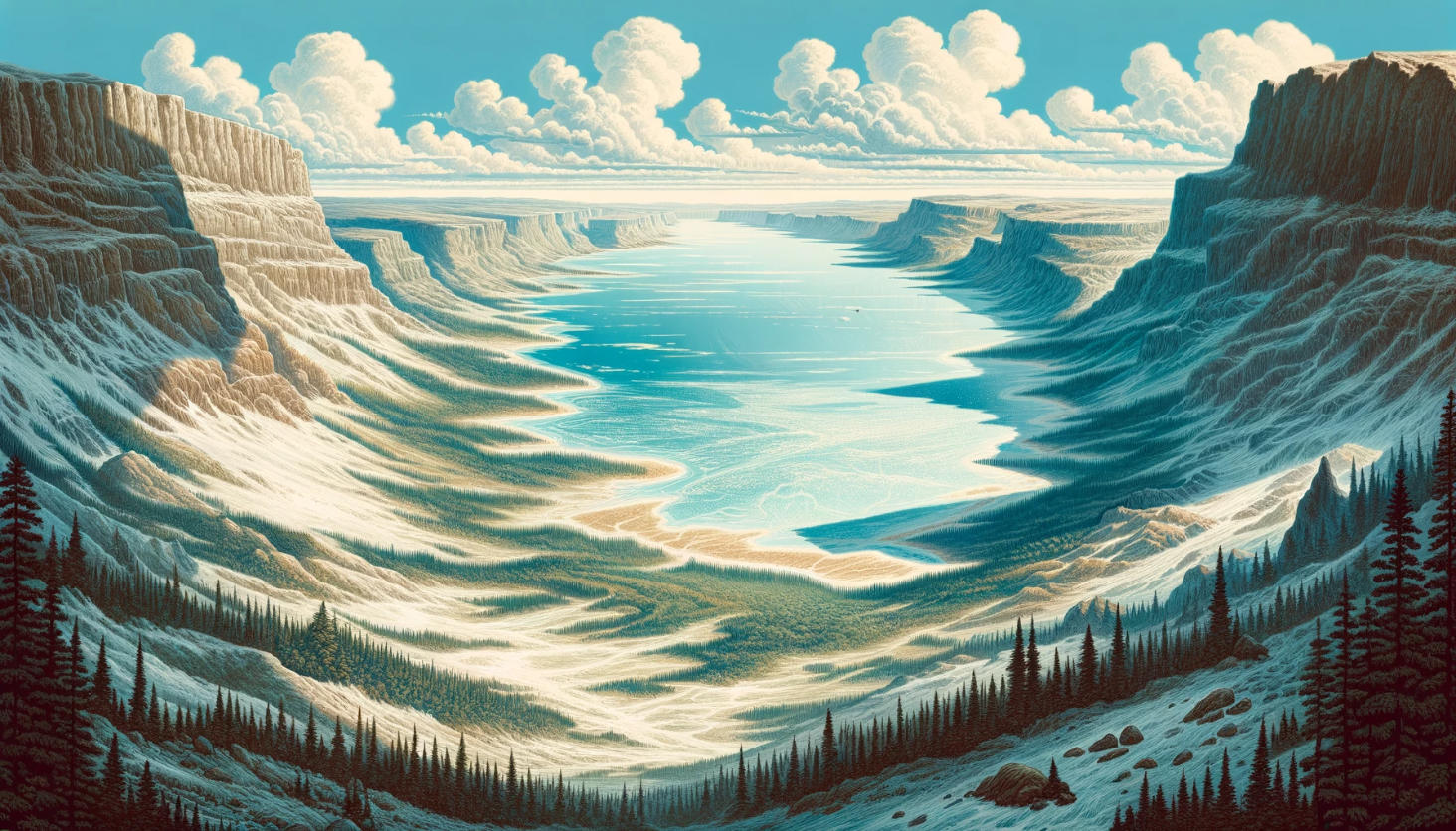
When the climate began to warm, the glacier started to melt. Huge amounts of meltwater collected in front of the retreating ice and formed an enormous lake known as Lake Agassiz. At one time this lake covered most of what is now southern Manitoba.
Rivers of meltwater carried sediment into the lake. When the water slowed down, the heavier particles like sand settled first, while the tiniest particles stayed suspended longer and drifted farther out into the lake before settling. Over time, thick layers of very fine sediment built up across the lake bottom.
Winnipeg sits on what used to be part of that lakebed. It’s on the former floor of a lake. When Lake Agassiz eventually drained away, it left behind the flat plains and clay-rich soils of the Red River Valley, what we call “Red River Gumbo.”
If you compare a handful of clay to a handful of sand, you can easily see the difference. Sand grains are large enough to see individually, but clay particles are so tiny they are almost impossible to see without a microscope. Because these particles are so small, they hold onto water and expand and shrink much more than sand or gravel soils do.
Over many years as landscaping contractors in Winnipeg, we've learned how to deal with this fact of life. If you want a landscaping contractor who can build a patio, interlocking paver driveway or walkway that stands up in Winnipeg. We'd love to help. Please contact us for a very easy preliminary estimate by email.