Concrete Pavers vs Concrete Slabs for Winnipeg Landscaping Projects
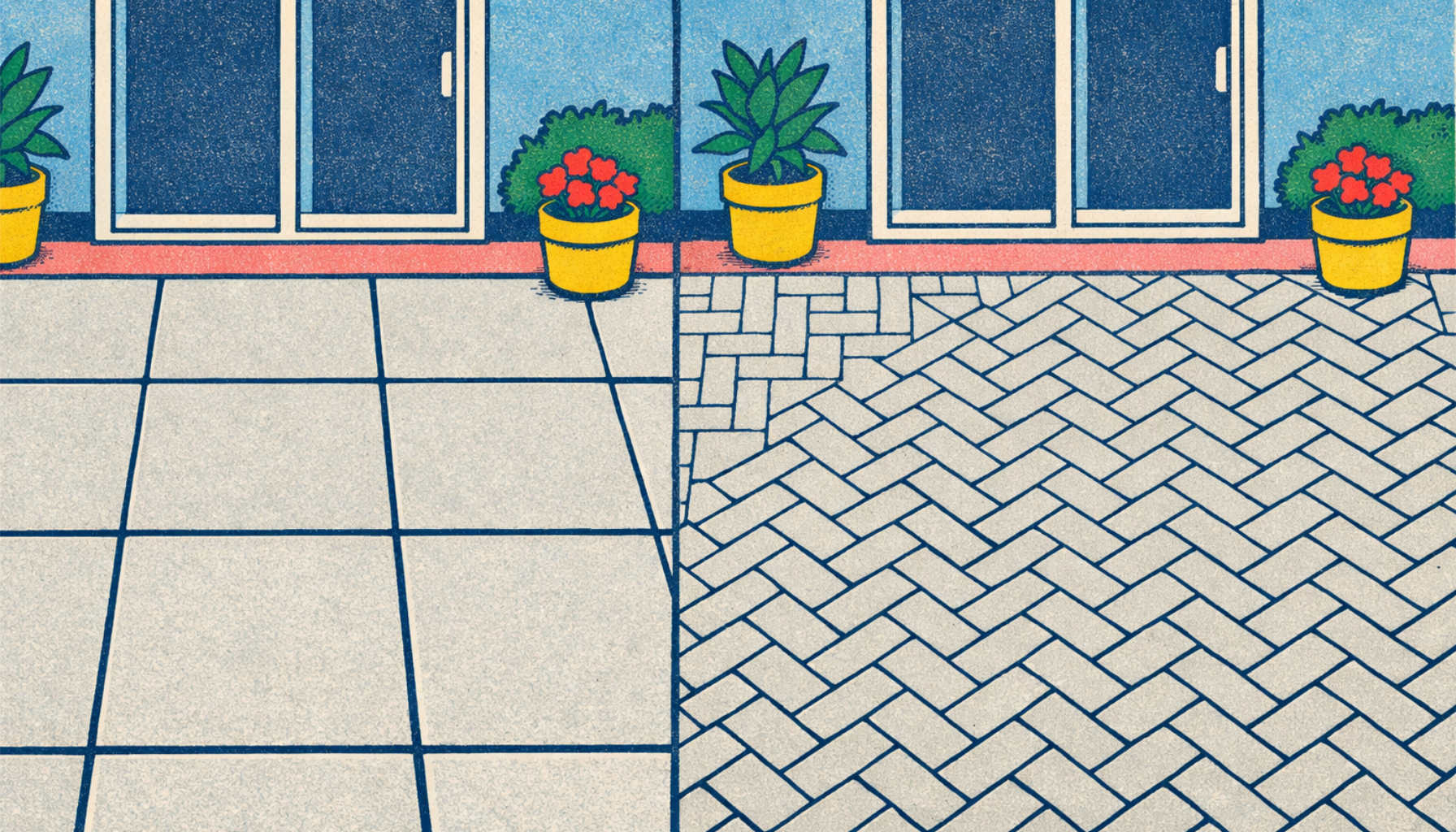
When choosing a material for your patio or walkway, one of the first decisions is whether to use concrete pavers or concrete patio slabs.
- Pavers come in a wide range of sizes and patterns and in various thicknesses from 2 3/8” to 4”.
- Slabs are usually 16” to 30” across and 2” or less in thickness.
Slab materials cheaper per sq ft, but pavers have lower installation cost
Looking at material costs, concrete slabs tend to be less expensive than pavers, but once labour costs are factored in the price difference between the two is negligible. This is because of the slightly more delicate installation techniques required for the larger, thinner slabs.
The difference in installation process
Base preparation is the same for both types of products.
We always install a minimum 6” deep base of compacted, crushed stone. With the base properly leveled, the pavers or slabs are laid down in the chosen pattern and then compacted into place, ensuring full contact with the base stone, and guaranteeing all pavers are perfectly level with their neighbours.
The difference is this: Concrete slabs are thinner so we are unable to use a plate compactor machine on them. Minor unevenness between slabs must be corrected with hand leveling. This extra step increases labour costs.
Strength and durability
While adequate for a pedestrian-only patio or walkway, concrete slabs should never be used in a driveway setting.
The strength advantage for pavers is not only because of thickness but also because we cannot use the plate compactor as mentioned above, and also because of joint dynamics, which we will discuss next.
The result is a finished surface that is slightly less durable than one made with pavers.
Joint dynamics
In a paver installation, the polymeric sand is a critical part of the system, locking the pavers together, and increasing the bearing capacity of the patio, walkway, or driveway by sharing point loads between adjacent pavers.
In a concrete slab installation, we will still use polymeric sand since it helps to seal the joints and keeps out dirt and weeds, but with the thinner slabs it doesn’t play the same role of locking the slabs together (less surface area).
With proper base prep, a concrete slab patio will be reasonably stable, and if you like the look of Barkman’s Brookside slab, for instance, it can be a durable, attractive choice. But paver choices like Holland or Roman pavers will be very close in price, and will provide more strength and durability for Winnipeg's soil conditions and climate.
As a Winnipeg landscaping company, we've been installing patios, walkways and driveways using all kinds of materials over the years. We would love the chance to work with you on your project including advising about material choices.
We offer very easy preliminary estimates by email with no need for a call or site visit. Just email us with a bit of information about your project.