What Are Concrete Pavers?
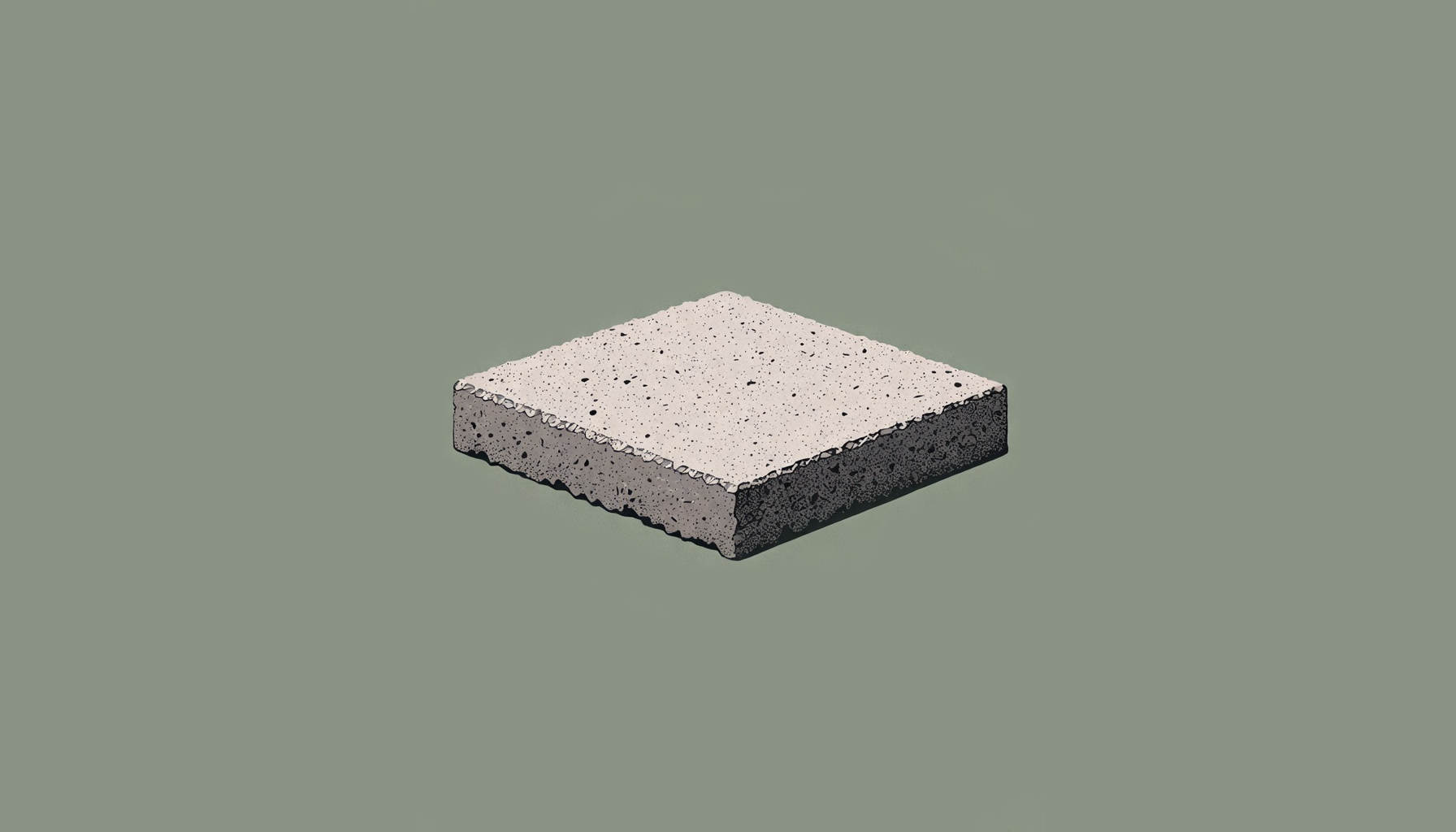
Very short answer: They are like bricks but made out of concrete.
More precise or technically accurate: Concrete pavers are cast concrete units, often rectangular or square, used for creating durable, modular hardscapes such as patios, walkways, driveways and plazas.
What does it mean to be "cast"?
This means you're pouring a substance into a mold and hardening it there. In the case of pavers, that substance is concrete.
In contrast, bricks are made of clay. The clay is formed into the desired shape and then hardened by fire in a kiln. This is the traditional brick that has been used for thousands of years. With pavers, the concrete is poured into a mold.
This manufacturing process does not happen on the job site. They are made at a plant. Barkman Concrete in Winnipeg is our supplier.
What is concrete?
Concrete is a mixture of sand, gravel and cement. Cement is the "glue" that binds the sand and gravel together once cured. It hardens when you add water to it. When you mix cement with water, sand, and gravel, it forms concrete.
Terminology: Bricks vs concrete pavers
When someone says “bricks” they might be talking about traditional bricks or concrete pavers, but technically they are not the same. The distinction mostly only matters to professionals and suppliers.
When someone says “pavers”, they are almost certainly talking about concrete pavers.
Colour
Concrete pavers can be made in a very wide variety of colours.
Pavers can be produced in distinct chromatic hues (e.g., blue, red, green, yellow), but they are extremely rare. Most pavers come in muted earth tones and greys, which remind us of natural stone or brick rather than rainbows.
Concrete pavers are the same colour throughout, unlike bricks which have a different surface colour from their interior colour.
Shape
Because they are made by pouring concrete into a mold, they can be made to be pretty much any shape. You have a lot of choices ranging from classic to modern to unique. Rectangular shapes are most common, but some pavers mimic the appearance of natural stone or wood.
Size
Concrete pavers are often, but not always, made larger than bricks. Clay bricks are usually around 4" by 8", and 2" to 3" thick. The classic Holland paver matches those dimensions, but there are many newer styles that can be as large as 24" across.
These larger pavers are often thicker than the smaller ones. Thicknesses of up to 4 inches increase the strength of the pavers, allowing them to resist cracking, even in driveway installations
Strength
Concrete pavers have a high compressive strength, suitable for vehicles. Clay bricks tend to be softer and more brittle, but can be a suitable choice for patios and walkways that won't see any vehicle traffic.
Installation
Unlike traditional bricks, concrete pavers are installed with no mortar. They are fitted quite tightly against each other with sand filling any remaining space. Concrete pavers can be made very uniformly which allows for tight joints.
Since they can be manufactured so uniformly, they are fast to install and allow consistent clean lines and patterns.
Cost
Concrete pavers tend to be a very cost-effective Winnipeg landscaping surface material over the long-run, partly due to their durability and appropriateness for the Winnipeg environment.
We've been landscaping in Winnipeg for 28 years and almost all of our projects involve installing concrete pavers. The patios, driveways and walkways we build are all guaranteed for five years so material choices matter a lot to us. Most of the time we recommend concrete pavers.